
Shade That Makes Patios Usable in Summer
Custom pergola and shade structure installation for Charlotte outdoor living areas.
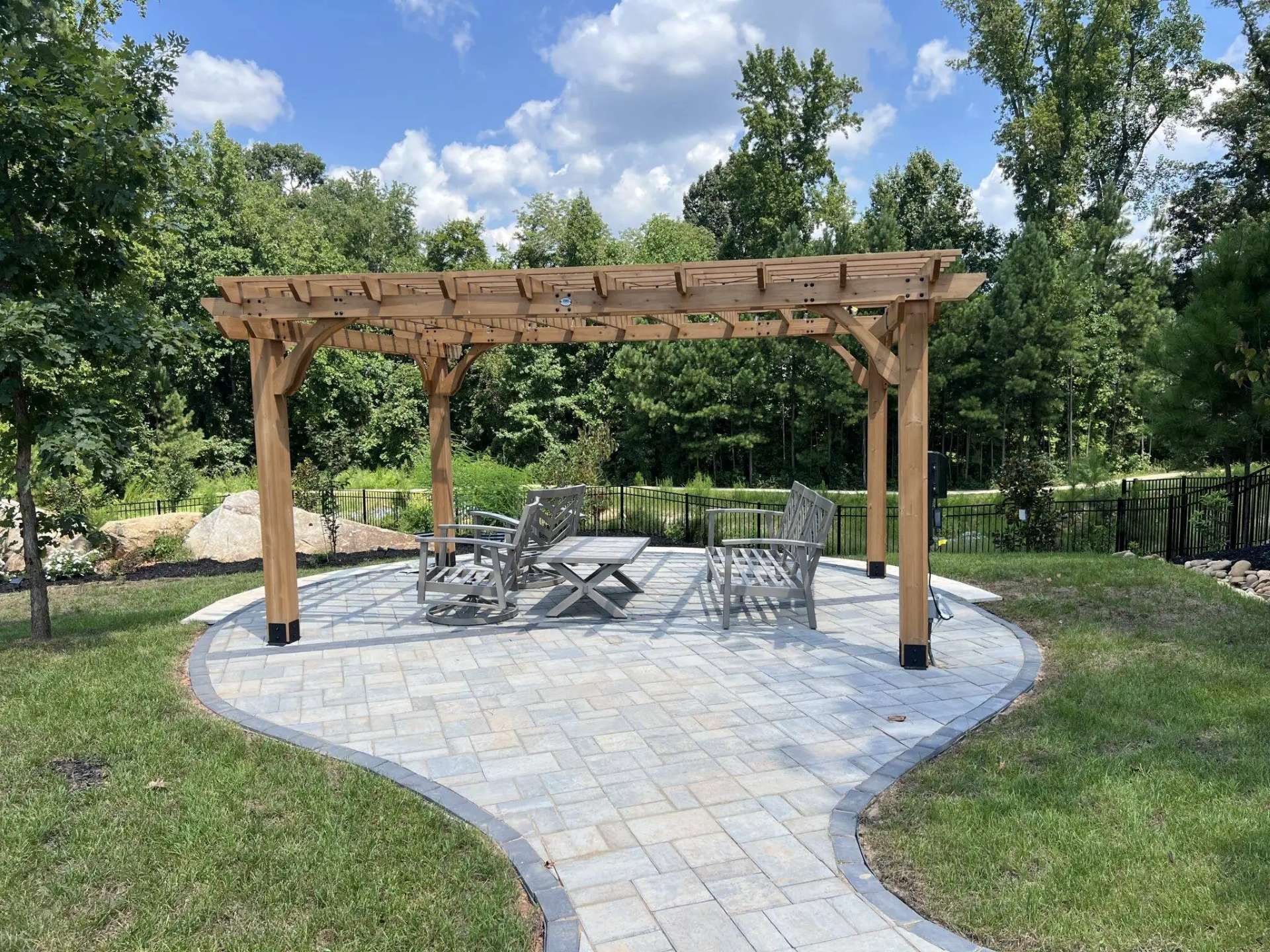
When your patio becomes too hot to use during Charlotte summers, a pergola adds overhead shade without closing off the space entirely. Pergolas use vertical posts and horizontal beams to create a framework that blocks direct sunlight while allowing airflow, which makes seating and dining areas more comfortable during peak afternoon heat. You gain a defined outdoor room that integrates with existing decks, patios, and landscape features while adding architectural detail to your backyard.
Taylor Made Dreamscapes Incorporated builds custom pergolas using durable wood or composite materials designed to withstand sun exposure and seasonal weather. The structures are anchored to concrete footings or attached to existing decks, and beam spacing is adjusted based on how much shade coverage you need. You can add retractable fabric panels, climbing plants, or string lights to customize the space for dining, lounging, or outdoor cooking areas.
If you want to make your Charlotte patio more comfortable during summer, reach out to discuss pergola design and material options.
How Beam Spacing and Height Affect Sun Coverage
Pergola construction in Charlotte begins with setting posts in concrete footings or securing them to an existing deck frame. The horizontal beams are attached to the tops of posts, and cross rafters are spaced to create partial shade that shifts throughout the day. The structure is designed to handle wind loads and the weight of any added fabric panels or hanging plants.
Once the pergola is installed, you will notice that the patio stays cooler during midday sun and the shaded area provides a comfortable spot for seating without feeling enclosed. The open roof design allows heat to rise and air to circulate, which prevents the space from becoming stuffy like a fully covered porch.
The pergola can be positioned to shade outdoor kitchens, fire pits, or lounge furniture, and the design can extend from the house or stand alone in the yard. Wood pergolas require periodic staining to prevent weathering, while composite materials maintain their appearance with minimal upkeep.
What homeowners ask about pergolas and shade
Homeowners often want to know how much shade a pergola provides, whether the structure can support plants or fabric panels, and how maintenance compares between wood and composite materials.
Taylor Made Dreamscapes Incorporated builds pergolas for Charlotte properties that coordinate with patios, decks, and outdoor kitchens while providing adjustable shade coverage. Get in touch to review design options and discuss how a pergola can improve your outdoor living space.